
Why Do Acne Scars in Punjabi Bagh Never Seem to Fully Go Away?
Overview
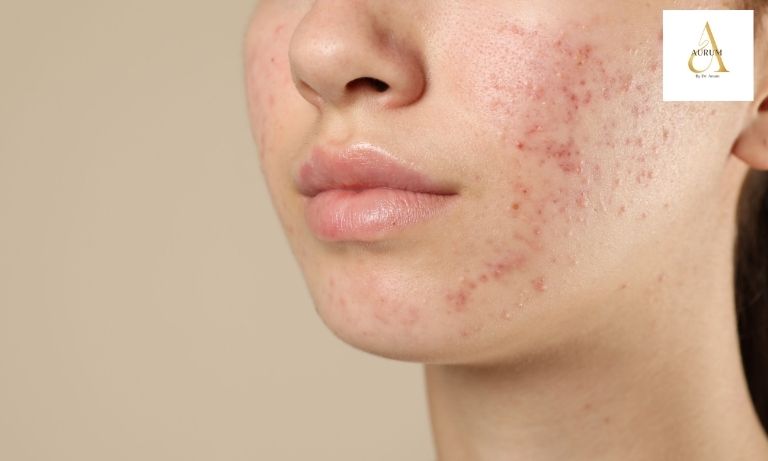
You cleared the acne. You followed the routine. You were patient. And yet the marks are still there, months later, sometimes years later, sitting on your skin like a reminder of something you thought you had dealt with.
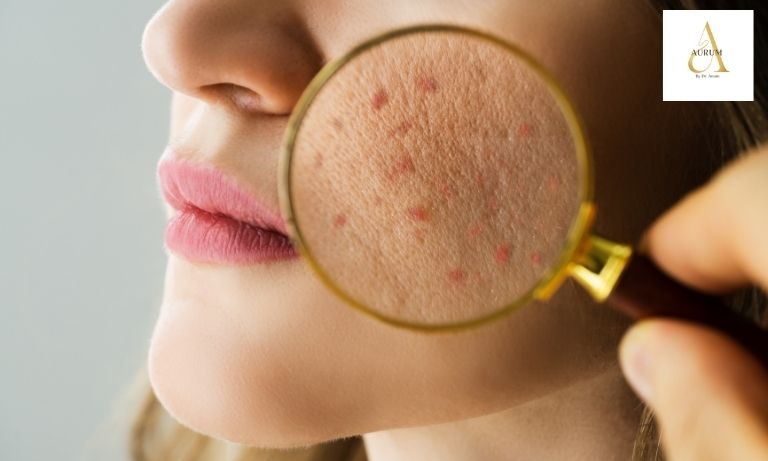
Acne scars are genuinely one of the more frustrating skin concerns to treat because they require a different approach from active acne entirely. The products that helped clear breakouts do almost nothing for established scarring. That is because a scar is a structural change in the skin, not just surface discolouration.
At Aurum by Dr Anam in Punjabi Bagh, acne scar treatment starts with identifying what type of scarring is present because the treatment that works for one type can be completely ineffective for another.
Why Do Acne Scars Actually Form?
When acne is severe or inflamed, it damages the deeper layers of the skin. The body responds by producing collagen to repair that damage. Sometimes it produces too little, and a depressed scar forms. Sometimes it produces too much, and a raised scar forms.
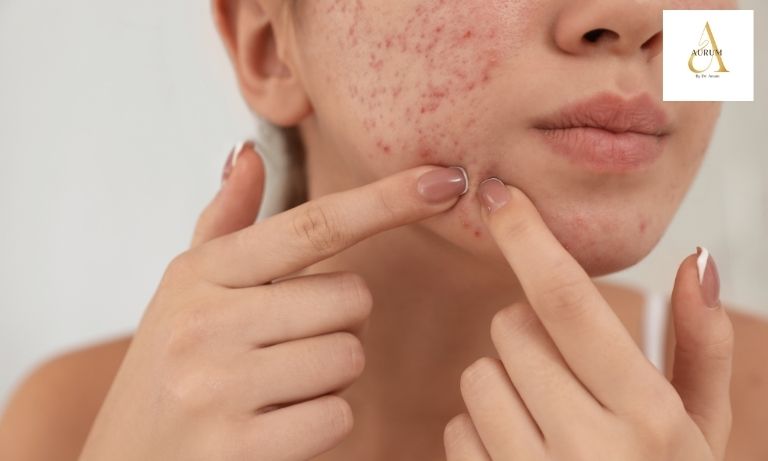
This is worth understanding because a lot of people blame themselves for scarring. Picking and squeezing does make things worse, but plenty of people who never touched their acne still end up with significant scarring. The inflammatory response itself is often enough.
What Are the Different Types of Acne Scars?
This is the part that determines everything about treatment. Treating all scars the same way is one of the main reasons people spend money on treatments that do not work for them.
Ice pick scars are deep, narrow, and pointed. They go down into the skin like a small hole and are among the most difficult to treat because of how deep they sit.
Boxcar scars are wider depressions with sharply defined edges. They are shallower than ice pick scars and respond better to resurfacing treatments.
Rolling scars create a wave-like uneven texture across the skin. They form because of fibrous bands pulling the skin surface downward and need treatments that address the underlying tethering.
Hypertrophic and keloid scars are raised rather than depressed. More common on the chest, back, and jaw. These need a completely different treatment approach from atrophic scars.
Post-inflammatory hyperpigmentation is technically not a scar but gets grouped in with acne scarring because it looks similar. Dark flat marks left after inflammation. These respond well to certain treatments and are the most straightforward type to address.
What Treatments Actually Work for Acne Scars in Punjabi Bagh?
At Aurum, treatment is selected after a proper assessment of scar type, skin tone, and depth of damage. A combination approach usually gives the best results.
Microneedling creates controlled micro-injuries in the skin that stimulate collagen production. Particularly effective for rolling and boxcar scars. Results build gradually over multiple sessions as new collagen remodels the treated area.
Chemical peels resurface the outer layer of skin and stimulate cell turnover. Useful for surface-level scarring and post-inflammatory pigmentation. The depth and type of peel are matched to the scar type and skin tone.
Laser treatments reach deeper layers of the skin than peels or microneedling. Fractional laser resurfacing is particularly effective for moderate to severe acne scarring. At Aurum, laser and advanced skin treatments are available as part of a comprehensive scar treatment plan.
Dermal fillers for scars work by filling in the depression from below. Useful for isolated deep scars that have not responded to resurfacing. Not a permanent solution, but it can provide significant improvement immediately.
Subcision is a minor procedure where a needle is used to break the fibrous bands causing rolling scars to tether the skin downward. Often used alongside microneedling or laser for rolling scars specifically.
Why Does Skin Tone Matter for Acne Scar Treatment?
This is a genuinely important point for anyone with Indian skin. Certain treatments, particularly aggressive laser resurfacing, can trigger post-inflammatory pigmentation in darker skin tones if settings are not calibrated carefully. A good result in a lighter skin tone can create new pigmentation problems in a darker one.
At Aurum, Dr Anam has specific experience with Indian skin and adjusts every treatment protocol accordingly. The goal is improvement without creating new concerns in the process.
How Many Sessions Are Needed?
Acne scar treatment is not a one-session fix for anyone. Realistic expectations matter here.
Most patients need between 4 and 6 sessions of microneedling or laser treatment spaced 4 to 6 weeks apart to see meaningful improvement. Severe scarring may need more. Post-inflammatory pigmentation often responds faster, sometimes in 2 to 3 sessions.
The improvement is progressive. Skin looks better after each session and continues improving for weeks afterward as collagen production builds. Patience is genuinely part of this treatment.
Conclusion
Acne scars stay because they represent actual structural changes in the skin, not just surface discolouration. That is why skincare products alone rarely make a dent. The right clinical treatment, matched to the type of scarring you actually have, is what changes things.
If you have been trying to treat acne scars at home for months without results, a proper assessment is the most useful next step.
Book an Acne Scar Consultation at Aurum by Dr Anam, Punjabi Bagh
Frequently Asked Questions
Q. Can acne scars be completely removed in Punjabi Bagh?
Significant improvement is achievable for most scar types. Complete removal depends on the depth and type of scarring. Most patients see 50 to 80 percent improvement with a proper treatment course. Deeper scars, like ice pick scars, improve less dramatically than surface-level scarring.
Q. Is acne scar treatment painful?
Most treatments involve minimal discomfort. Topical numbing cream is applied before microneedling and laser procedures. Chemical peels may cause a mild tingling sensation. Most patients find it very manageable.
Q. Can I treat acne scars if I still have active acne?
Active acne needs to be controlled before scar treatment begins. Treating scars while new acne is forming creates new damage alongside the treatment. Dr Anam will assess this at the consultation and suggest the right sequence of treatment.
Q. How long before I see results from acne scar treatment?
Most patients notice improvement after 2 to 3 sessions. The most visible results typically develop 4 to 8 weeks after each session as collagen production increases. A full course gives the most complete outcome.