
What Type of Acne Scar Treatment in Punjabi Bagh Matches the Type of Scar You Actually Have?
Overview
Acne scar treatment in Punjabi Bagh works best when the treatment modality is matched to the specific scar type, because ice pick scars, rolling scars, boxcar scars, and post-inflammatory hyperpigmentation each respond to different mechanisms and depths of treatment. Using microneedling alone on ice pick scars, for instance, produces minimal change because it cannot reach the depth at which those scars are anchored. The most common reason patients feel their scar treatment did not work is not that the treatment is ineffective but that it was matched to the wrong scar type.
For more before-and-after results and behind-the-scenes clinic content, follow Aurum on Instagram, or call +91 93102 11121 to speak with the clinic directly.
Why All Acne Scars Do Not Look the Same Under the Surface
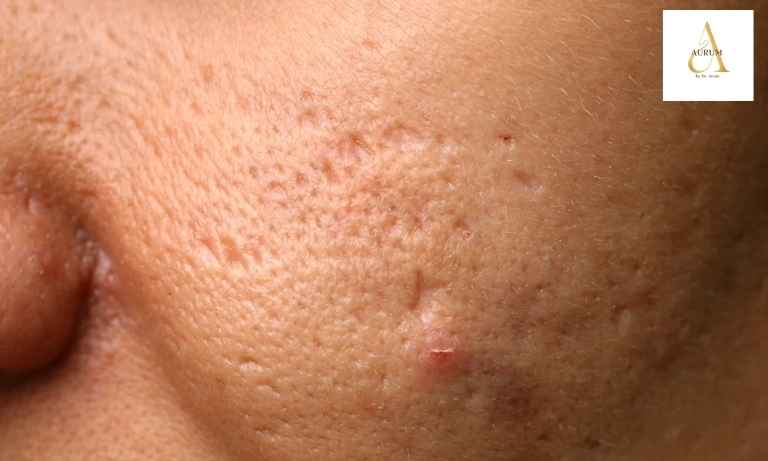
The visible depression or discolouration of an acne scar is the outcome, not the mechanism. Different mechanisms of scarring produce different structural changes in the skin, and those structural differences are what determine which treatment can actually reach and modify them. A rolling scar is caused by fibrous bands that tether the skin surface down from beneath, creating a wave-like undulation across the skin. Releasing those bands is what improves the rolling appearance, not resurfacing the surface above them. An ice pick scar is a narrow, deep channel that extends into the dermis or beyond, and the depth means surface treatments contribute very little to changing its appearance. Boxcar scars are shallow but wide, with defined vertical edges, and they respond well to resurfacing treatments that smooth those edges and stimulate collagen in the depressed floor of the scar. Post-inflammatory hyperpigmentation is not technically a scar in the structural sense at all. It is a pigmentation response to inflammation and sits entirely in the epidermis, which is why it responds well to treatments that work at the surface. Treating it as a structural scar with deep interventions is a mismatch that adds cost and downtime without proportionate benefit. For a broader look at why these scars form and why they persist despite treatment, this earlier guide on why acne scars in Punjabi Bagh never seem to fully go away is the most relevant companion to this one.
What Works for Rolling Scars Specifically
Rolling scars require subcision as their primary treatment. Subcision is a minor procedure in which a needle is inserted beneath the scar and moved to physically break the fibrous bands tethering the skin down. Once the band is released, the skin surface rises, and the rolling appearance reduces significantly. Subcision is often combined with PRP or filler injected into the released space to support the improvement. Microneedling and laser can be used as adjuncts after subcision to improve overall texture, but they cannot replace subcision for rolling scars because they do not address the tethering. At Aurum by Dr Anam’s skin treatments and rejuvenation department, rolling scars are assessed for subcision eligibility as part of the first consultation rather than defaulting to microneedling as a starting point.
What Works for Boxcar and Ice Pick Scars
Boxcar scars respond well to fractional laser resurfacing, which resurfaces the outer edge of the scar and stimulates collagen production in the depressed floor to gradually fill it. TCA Cross, a technique where high-concentration TCA is applied precisely inside ice pick scars using a toothpick, produces collagen stimulation inside the narrow channel that broader resurfacing treatments cannot reach. TCA Cross is specifically for ice pick scars and is one of the few treatments that produces meaningful improvement in that scar type. For a range of acne scar depths, a combination approach using TCA Cross for ice picks alongside fractional laser or microneedling for boxcar and textural changes generally produces better overall outcomes than any single modality alone. Laser and advanced technology treatments at Aurum include fractional options appropriate for acne scar treatment specifically.
What Works for Post-Inflammatory Hyperpigmentation
Post-inflammatory hyperpigmentation left behind by acne is often addressed as part of the wider skin treatments and rejuvenation programme at Aurum.
Post-inflammatory hyperpigmentation is the easiest acne scar type to treat precisely because it is entirely in the epidermis. Chemical peels, topical agents including niacinamide, vitamin C, and azelaic acid, and gentle laser toning all work well at this depth. The mistake most patients make is treating it identically to structural scars. It does not need subcision; it does not need fractional laser at depth, and it often resolves faster than structural scars if the right surface-level approach is used consistently. For patients managing pigmentation concerns alongside acne scars, the pigmentation treatment information at Aurum covers the range of options available for both concerns.
For related reading, see our guide on how peels compare against HydraFacial and laser for scarring.
Conclusion
Choosing the right approach starts with asking the right questions and understanding what your own skin or concern actually needs, not a generic protocol. The team at Aurum by Dr Anam works with patients through every stage of this decision, from the first consultation to full recovery. Book an Acne Scar Consultation at Aurum, Punjabi Bagh
Frequently Asked Questions
How do I know which type of acne scars I have in Punjabi Bagh?
A clinical assessment under good lighting and sometimes dermoscopy is the most reliable way. Ice pick scars are narrow and deep. Boxcar scars are wider with defined edges. Rolling scars create an undulating texture across the skin. Post-inflammatory hyperpigmentation is flat and discoloured without any surface depression.
How many sessions does acne scar treatment take?
It depends on the scar type and severity. Subcision may need one to three sessions for rolling scars. Fractional laser or microneedling for boxcar scars typically requires four to six sessions. TCA Cross for ice picks is usually repeated every four to six weeks until the channel fills adequately.
Can all four scar types be treated at the same clinic visit?
Not always in the same session, since different procedures have different recovery requirements. However, a comprehensive plan addressing multiple scar types simultaneously over a course of sessions is common practice and is planned at the initial assessment.
Does microneedling alone work for all acne scars?
No. Microneedling is effective for improving overall texture and shallow boxcar scars but has a limited effect on ice pick scars and cannot address the tethering that causes rolling scars. A scar type assessment is essential before deciding on microneedling as the treatment approach.