
Q Switch Laser (Tattoo Removal) in Punjabi Bagh: Procedure, Benefits, Cost & Results
Tattoos can hold personal meaning, represent important memories, or simply reflect a particular phase of life. However, preferences change over time, and some people eventually decide to remove an existing tattoo. Whether it is an unwanted design, a faded tattoo, or one associated with the past, modern laser technology offers a way to reduce tattoo pigmentation without surgical excision in many cases.
Q Switch Laser (Tattoo Removal) in Punjabi Bagh is an option for individuals looking to fade or remove unwanted tattoos through a controlled, non-surgical procedure.
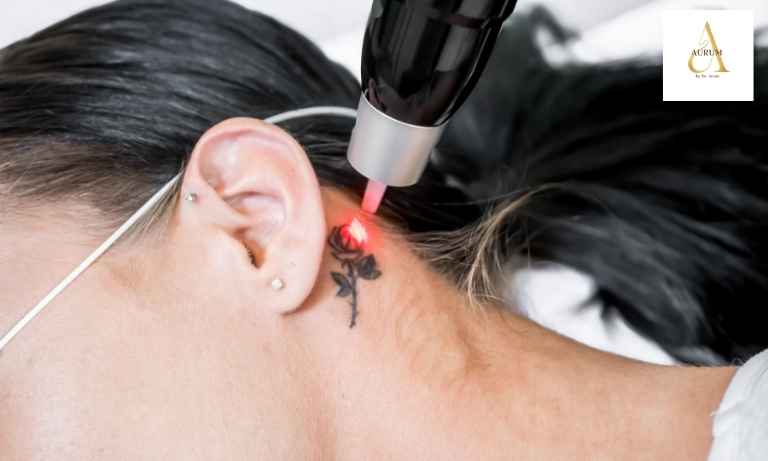
Q-switched lasers deliver extremely short pulses of high-intensity light that target tattoo pigment within the skin. The fragmented pigment particles are then gradually cleared through the body’s biological processes.
At Aurum By Dr Anam, individuals exploring aesthetic treatments can seek information about available technologies and personalised skin consultations.
This guide explains how Q Switch Laser Tattoo Removal works, its benefits, the number of sessions required, potential side effects, aftercare, and what to expect before choosing treatment.
What is Q Switch Laser (Tattoo Removal)?
Q Switch Laser Tattoo Removal is a non-surgical procedure that uses short, high-energy laser pulses to break tattoo ink into smaller particles, allowing the body to gradually clear some of the pigment.
The term Q-switched refers to a laser technology that produces extremely short pulses, typically measured in nanoseconds.
These pulses generate rapid energy absorption within tattoo pigment, producing photoacoustic effects that help fragment ink particles while limiting the duration of heat exposure to surrounding tissues.
Q-switched Nd:YAG lasers commonly operate at two wavelengths:
- 1064 nm: Often used for black and dark blue tattoo pigments and generally preferred for darker skin types because it interacts less with epidermal melanin.
- 532 nm: Can target certain red, orange, and related warm-coloured pigments, but requires additional caution in darker skin tones.
Other wavelengths and laser systems may be necessary for certain green, blue, or resistant pigments.
The effectiveness of tattoo removal depends on the tattoo’s colour, depth, age, ink composition, location, and the individual’s skin characteristics.
How Does Q Switch Laser Tattoo Removal Work?
Laser tattoo removal uses a process called selective photothermolysis, with photoacoustic fragmentation playing a significant role in Q-switched laser treatments.
Step 1: Targeting Tattoo Pigment
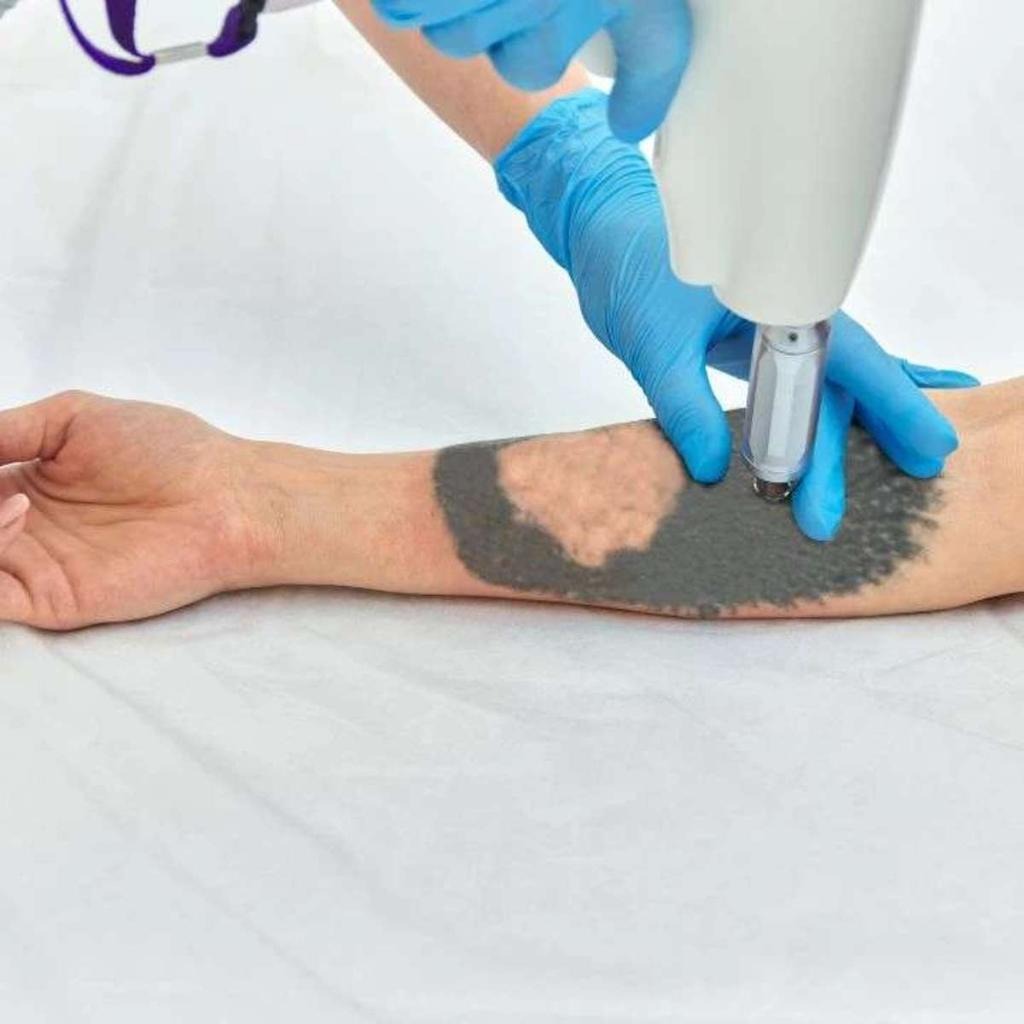
The laser delivers pulses of light that are absorbed by selected tattoo ink particles.
Step 2: Fragmentation of Ink Particles
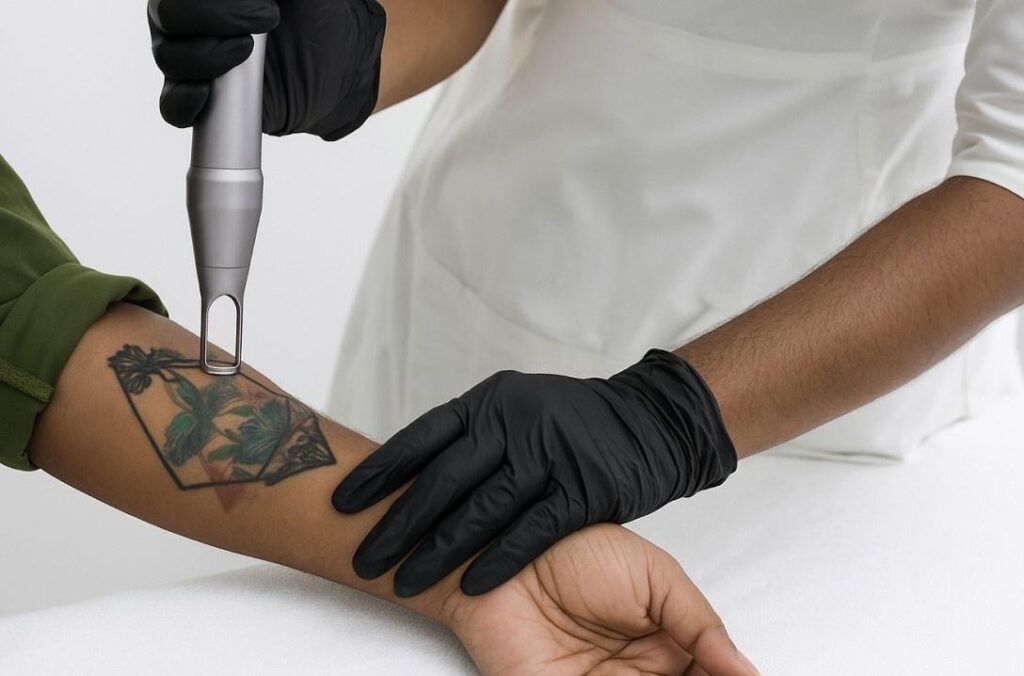
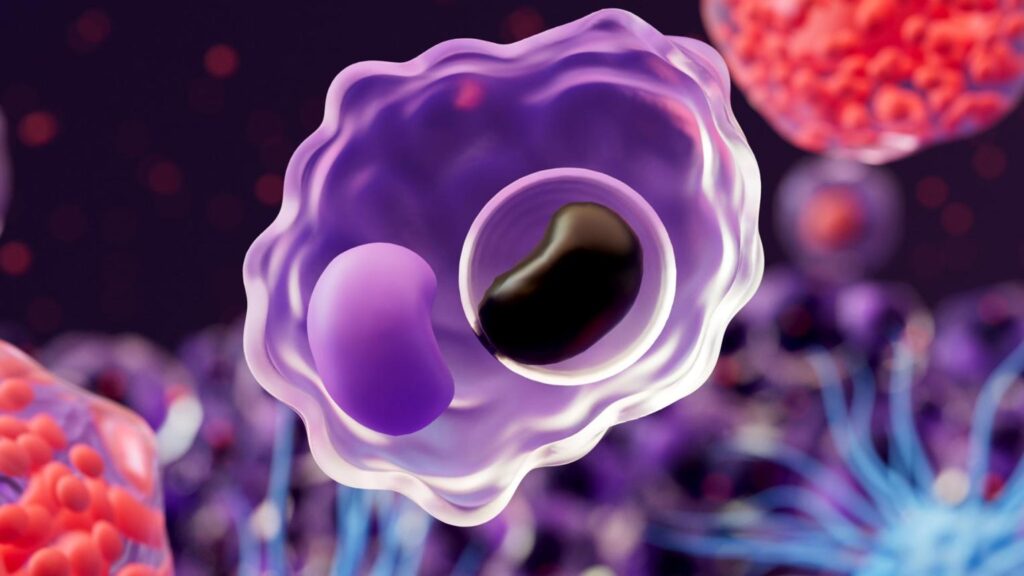
Rapid energy absorption creates mechanical stress that breaks some pigment particles into smaller fragments.
Step 3: Gradual Pigment Clearance
The immune system processes and clears some fragmented pigment over the following weeks.
Step 4: Progressive Tattoo Fading
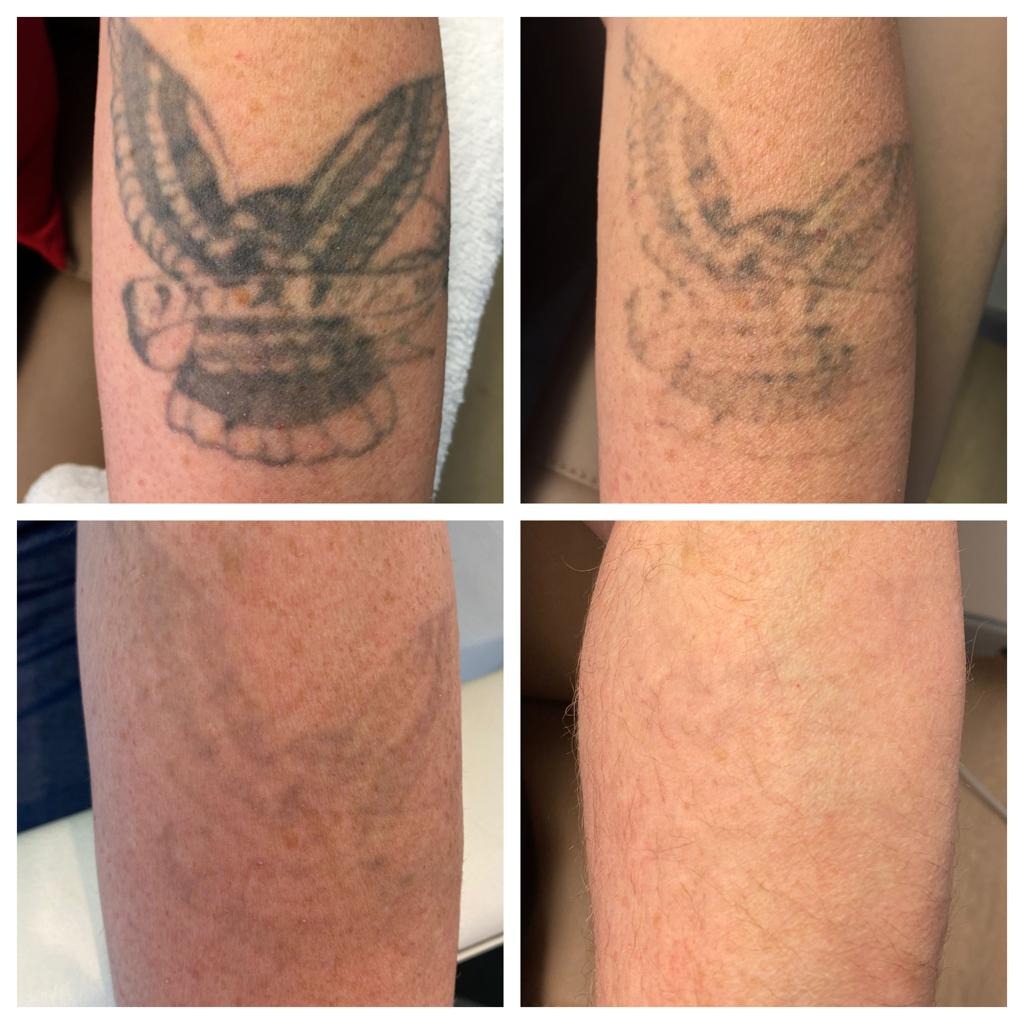
With appropriately spaced sessions, the tattoo may become progressively lighter. Complete removal is not guaranteed.
Unlike tattoo-covering methods, laser treatment aims to reduce the amount of visible ink within the skin rather than conceal it.
Benefits of Q Switch Laser Tattoo Removal
Q-switched laser technology is widely used in dermatology for selected tattoo-removal procedures.
1. Non-Surgical Tattoo Removal
The procedure generally does not require incisions or stitches. Laser pulses are delivered through a handpiece positioned over the tattooed area.
2. Targeted Pigment Treatment
Appropriate laser wavelengths can target certain ink pigments while limiting unnecessary exposure to surrounding tissue. However, temporary skin changes and permanent complications remain possible.
3. Suitable for Different Tattoo Types
Professional, amateur, and some cosmetic tattoos may respond to laser treatment, although results differ significantly according to pigment composition and depth.
4. Gradual Tattoo Fading
Laser treatment can progressively reduce the appearance of unwanted tattoo ink over multiple sessions.
5. Potential Treatment for Dark Tattoos
Black tattoo ink often responds relatively well to suitable Q-switched laser wavelengths compared with certain coloured inks.
6. Limited Downtime for Some Patients
Many people resume ordinary activities relatively quickly, although redness, swelling, blistering, and temporary wound care may be necessary.
For more information about aesthetic treatment technologies, explore Our Technology at Aurum By Dr Anam.
Which Tattoo Colours Can Q Switch Laser Remove?
Tattoo colour is one of the most important factors affecting treatment response.
| Tattoo colour | Expected response |
| Black | Often responds well to appropriate laser treatment |
| Dark blue | May respond to 1064 nm or other suitable wavelengths |
| Red | May respond to 532 nm treatment |
| Orange | May respond to selected wavelengths depending on pigment composition |
| Green | Often more challenging; may require 694 nm or 755 nm technology |
| Yellow | Frequently difficult to remove |
| White or skin-coloured | May darken paradoxically after laser exposure |
Not all Q-switched lasers can treat every colour effectively. Multicoloured tattoos may require different wavelengths or laser platforms.
Permanent makeup, particularly eyebrow and lip pigments, requires special caution because some cosmetic pigments can darken following laser exposure.
How Many Sessions Are Required for Q Switch Laser Tattoo Removal?
Most tattoos require multiple laser sessions, and the exact number cannot be reliably determined without assessing the tattoo.
Some tattoos show substantial fading after several sessions, while others may require 6–12 or more treatments. Resistant tattoos can require additional sessions or may never disappear completely.
Factors influencing the number of sessions include:
- Tattoo size and surface area.
- Professional versus amateur tattoo application.
- Ink density, colour, and composition.
- Depth of pigment deposition.
- Tattoo age and anatomical location.
- Skin tone and previous scarring.
- Individual immune response.
- Laser wavelength and treatment parameters.
Sessions are commonly spaced approximately 6–8 weeks or longer apart to allow skin recovery and continued pigment clearance. The appropriate interval should be determined by the treating clinician.
Is Q Switch Laser Tattoo Removal Safe for Indian Skin?
Q-switched Nd:YAG lasers can be used in darker skin types, including many Indian skin tones, when the wavelength and treatment settings are selected appropriately.
However, darker skin contains more epidermal melanin, which may absorb laser energy and increase the risk of pigmentary complications.
Potential side effects include:
- Temporary redness and swelling.
- Blistering, crusting, or discomfort.
- Post-inflammatory hyperpigmentation.
- Hypopigmentation or lighter skin patches.
- Temporary changes in skin texture.
- Scarring, although this is less common with appropriate treatment.
- Incomplete tattoo clearance or residual pigment.
A proper skin assessment, cautious treatment parameters, and appropriate aftercare are especially important for Fitzpatrick skin types IV–VI.
Patients with a history of keloids, poor wound healing, photosensitivity, or certain skin disorders should discuss these concerns before treatment.
Does Q Switch Laser Tattoo Removal Hurt?
Laser tattoo removal can cause discomfort, often described as a sensation similar to repeated snaps of a rubber band against the skin.
Pain intensity varies according to the tattoo’s location, size, ink density, individual sensitivity, and treatment settings.
To improve comfort, clinicians may use skin-cooling methods or appropriate topical anaesthetic preparations.
Temporary redness, mild swelling, and a frosted white appearance immediately after treatment can occur. Some patients may also develop blisters or crusting during recovery.
What Happens During a Q Switch Laser Tattoo Removal Session?
Step 1: Initial Consultation
The clinician evaluates the tattoo’s size, colour, age, location, and ink characteristics, along with your skin type and medical history.
Step 2: Skin Preparation
The treatment area is cleaned. Suitable protective eyewear is essential for both the patient and the operator.
Step 3: Laser Application
The clinician delivers controlled laser pulses over the tattoo using settings selected for the pigment and skin characteristics.
Step 4: Immediate Post-Treatment Care
Cooling and appropriate wound-care measures may be provided depending on the skin response.
Step 5: Follow-Up Assessment
The tattoo is reassessed after sufficient healing time to determine whether another session is appropriate.
A treatment session may take only a few minutes for a small tattoo, while larger or more complex tattoos can take longer.
Aftercare Tips Following Q Switch Laser Tattoo Removal
Correct aftercare supports healing and may help reduce the risk of complications.
- Keep the treated area clean and follow the clinician’s wound-care instructions.
- Avoid scratching, picking, or peeling blisters and crusts.
- Protect the area from direct sunlight and use suitable sun protection once the skin has healed sufficiently.
- Avoid swimming pools, hot tubs, and activities that expose broken skin to contamination until healed.
- Use prescribed or recommended skincare products only as directed.
- Avoid applying strong exfoliants, retinoids, or irritating products to the healing area.
- Attend follow-up appointments to monitor skin recovery and tattoo fading.
Seek prompt medical attention if you experience increasing pain, spreading redness, fever, pus, or other signs of infection.
What Is the Cost of Q Switch Laser Tattoo Removal in Punjabi Bagh?
The cost of Q Switch Laser Tattoo Removal in Punjabi Bagh depends on several factors, including tattoo size, ink colour, complexity, treatment duration, and the number of sessions required.
Smaller tattoos may cost less per session than large or densely pigmented designs. Multicoloured tattoos may also require additional treatment planning.
Because the total cost depends on individual assessment, an accurate quotation should be obtained from the clinic rather than relying on a generic online price.
For appointment information and current pricing, visit Aurum By Dr Anam’s Contact Page.
Why Choose Aurum By Dr Anam for Tattoo Removal Consultation in Punjabi Bagh?
Choosing a suitable aesthetic clinic is an important part of planning tattoo removal, particularly for individuals with Indian skin tones who may be more susceptible to pigmentation changes after laser treatment.
Aurum By Dr Anam is an aesthetic clinic in Punjabi Bagh, New Delhi, where individuals can enquire about available skin treatments and laser technologies.
Personalised Skin Assessment
Every tattoo is different. An assessment of skin tone, tattoo colour, pigment depth, and previous skin reactions can help determine whether laser removal is appropriate.
Technology-Focused Aesthetic Care
The clinic provides information about its aesthetic equipment and treatment technologies on its Our Technology page. Patients should confirm which Q-switched laser wavelengths and tattoo-removal services are currently available.
Realistic Treatment Expectations
Tattoo removal requires patience. A responsible treatment plan should explain the possibility of multiple sessions, incomplete clearance, temporary pigmentation changes, and other risks.
Convenient Location in West Delhi
Located in Punjabi Bagh, Aurum By Dr Anam is accessible to individuals from nearby West Delhi neighbourhoods such as Paschim Vihar, Rajouri Garden, Moti Nagar, and Kirti Nagar.
Learn more about the clinic through its About Us page.
Can Q Switch Laser Remove a Tattoo Completely?
Q Switch Laser Tattoo Removal can produce significant fading and, in some cases, near-complete or complete visible clearance. However, 100% tattoo removal cannot be guaranteed.
Black tattoos generally respond more predictably than certain coloured tattoos, while deeply deposited pigment and complex professional tattoos may be more resistant.
Some patients may be left with faint pigment, changes in skin colour, or altered skin texture after treatment.
The final outcome depends on the tattoo, skin characteristics, treatment technique, and healing response.
Q Switch Laser vs Picosecond Laser for Tattoo Removal
Both Q-switched and picosecond lasers are used for tattoo removal, but they differ primarily in pulse duration.
| Feature | Q Switch Laser | Picosecond Laser |
| Pulse duration | Nanoseconds | Picoseconds |
| Mechanism | Primarily photoacoustic pigment fragmentation | Strong photoacoustic effects with shorter pulses |
| Tattoo colours | Depends on available wavelengths | Depends on available wavelengths |
| Number of sessions | Multiple sessions usually required | Multiple sessions usually required |
| Skin safety | Depends on wavelength, settings, and skin type | Depends on wavelength, settings, and skin type |
| Effectiveness | Established option for many tattoos | May offer advantages for selected resistant pigments |
Neither technology guarantees complete removal. The choice should depend on the tattoo characteristics, available wavelengths, skin type, and clinical assessment.
Conclusion
Q Switch Laser (Tattoo Removal) in Punjabi Bagh offers a non-surgical approach for individuals seeking to reduce or remove unwanted tattoo pigmentation. By delivering short pulses of laser energy, the technology fragments tattoo ink and allows gradual pigment clearance over time.
Although many tattoos respond well to treatment, results depend on ink colour, tattoo depth, skin tone, treatment parameters, and individual healing. Multiple sessions are generally necessary, and complete removal is not always possible.
For individuals considering laser tattoo removal in West Delhi, professional assessment and appropriate treatment planning are essential.
At Aurum By Dr Anam, patients can enquire about laser technologies, aesthetic consultations, and available treatment options.
Book Your Skin Consultation at Aurum By Dr Anam
Address: 10 Basement, NWA Club Road, Near Bikaner Wala, Punjabi Bagh, New Delhi – 110026
Phone: +91 93102 11121 | +91 93102 11131
Website: www.aurumbydranam.com
Appointments: Contact Aurum By Dr Anam
Confirm the availability of Q-switched tattoo removal and the specific laser platform with the clinic before booking.
10 GEO-Optimized FAQs About Q Switch Laser Tattoo Removal in Punjabi Bagh
1. What is Q Switch Laser Tattoo Removal, and how does it work?
Q Switch Laser Tattoo Removal is a non-surgical treatment that uses short, high-energy laser pulses to break tattoo pigment into smaller particles. The body’s immune system gradually processes some of these particles, causing the tattoo to fade. Multiple sessions are usually required, and complete removal is not guaranteed.
2. Where can I get Q Switch Laser Tattoo Removal in Punjabi Bagh, Delhi?
Individuals seeking Q Switch Laser Tattoo Removal in Punjabi Bagh can contact Aurum By Dr Anam on NWA Club Road, near Bikaner Wala, for information about available laser treatments and consultations. Patients should confirm whether Q-switched tattoo removal is currently offered before scheduling an appointment.
3. How many sessions does Q Switch Laser take to remove a tattoo?
Many tattoos require approximately 6–12 or more laser sessions, although some need fewer and others considerably more. The number depends on tattoo size, ink colour, pigment depth, age, location, and skin type. Sessions are typically separated by several weeks to allow healing and pigment clearance.
4. Is Q Switch Laser Tattoo Removal safe for Indian skin?
Q-switched Nd:YAG lasers, particularly at 1064 nm, can be suitable for many darker Indian skin tones when used with appropriate settings. However, risks include hyperpigmentation, hypopigmentation, blistering, and scarring. A qualified clinician should assess skin type and tattoo characteristics before treatment.
5. What is the cost of Q Switch Laser Tattoo Removal in Punjabi Bagh?
The cost depends on tattoo size, pigment colour, ink density, number of sessions, and treatment complexity. Since prices vary between clinics and patients, an accurate estimate requires an individual assessment. Contact Aurum By Dr Anam directly for current treatment availability and pricing information.
6. Can Q Switch Laser remove a permanent tattoo completely?
Q Switch Laser can significantly fade many permanent tattoos, and some may achieve complete visible clearance. However, full removal cannot be guaranteed. Certain colours, deeply deposited ink, and dense professional tattoos may leave residual pigment even after multiple treatments.
7. Is Q Switch Laser Tattoo Removal painful?
Laser tattoo removal can cause a snapping or stinging sensation during treatment. The level of discomfort varies according to tattoo location, size, skin sensitivity, and laser settings. Cooling techniques or topical anaesthesia may help improve comfort during the procedure.
8. How long does skin take to heal after Q Switch Laser Tattoo Removal?
Initial redness and swelling often improve within a few days, while blistering or crusting may take approximately one to two weeks or longer to heal. Recovery varies according to treatment intensity, skin sensitivity, and aftercare. Further sessions should be scheduled only after adequate healing.
9. Which tattoo colours are hardest to remove with Q Switch Laser?
Yellow, green, white, and certain light-coloured pigments can be challenging to remove with Q-switched lasers. Black ink generally responds more reliably. Some colours require specialised wavelengths, and white or flesh-coloured cosmetic pigments may darken after laser treatment.
10. How can I book a Q Switch Laser Tattoo Removal consultation at Aurum By Dr Anam?
To enquire about Q Switch Laser Tattoo Removal in Punjabi Bagh, call Aurum By Dr Anam at +91 93102 11121 or +91 93102 11131. You can also visit the clinic’s Contact Us page to request information about consultation availability, laser technologies, treatment suitability, and pricing.