
Overview
Chemical peel treatment in Punjabi Bagh works across three depths, superficial, medium, and deep, and the right one depends on your skin type, concern, and how much downtime you can manage, not just how dramatic a result you want. A glycolic peel at 20 to 30 percent suits oily or mildly uneven skin, while a TCA peel at 15 to 25 percent addresses deeper pigmentation or scarring. Choosing the wrong strength for your skin type causes more irritation than improvement, which is why matching the peel to the person matters more than choosing the most aggressive option available.
For more before-and-after results and behind-the-scenes clinic content, follow Aurum on Instagram, or call +91 93102 11121 to speak with the clinic directly.
Why Peel Strength is the Question Most Patients Never Think to Ask
Most people researching chemical peel treatment in Punjabi Bagh focus on what a peel does, not on which version they actually need. That gap is where most disappointing peel experiences come from. A superficial peel on skin that needs medium depth produces minimal change. A medium peel on reactive or sensitive skin produces unnecessary irritation, extended redness, and sometimes post-inflammatory pigmentation that takes longer to resolve than the original concern. The peel itself is not the variable. The match between the peel and the skin is. If you have not already read the complete guide to chemical peel treatment benefits and recovery, which covers the foundational process in detail and is worth reading alongside this one.
What Superficial Peels Are Actually Good For
Superficial peels use low concentrations of alpha hydroxy acids, glycolic or lactic acid being the most common, and work on the outermost layer of skin only. They produce little to no visible peeling and require essentially no downtime. These suit skin that is oily, mildly congested, dull, or dealing with early fine lines. They also suit patients who are new to peels and want to understand how their skin responds before committing to anything stronger. Indian skin types, particularly Fitzpatrick types III to V, often respond well to superficial peels because the risk of triggering post-inflammatory hyperpigmentation is significantly lower at this depth. For someone managing mild pigmentation or uneven texture, a course of monthly superficial peels over three to four months often produces more consistent results than a single stronger peel followed by a prolonged recovery.
When Medium Depth Peels Become the Relevant Option
Medium peels using TCA at concentrations between 15 and 25 percent penetrate the upper dermis and are appropriate for more established concerns. Moderate pigmentation, acne scarring that has not responded to superficial peels, and deeper uneven texture are the situations where medium peels produce a meaningfully different result from anything shallower. The tradeoff is visible peeling for five to seven days and skin that is sensitive and flushed for up to ten days after the session. For patients who have been managing stubborn pigmentation without consistent results, a medium peel combined with a proper pre-treatment protocol of two to four weeks of skin conditioning often produces the kind of change that months of superficial peels could not achieve. If you have also been exploring how peels compare to laser and HydraFacial for your concern, this comparison across the three treatments lays that out clearly.
How Skin Type Changes the Recommendation
Oily skin tolerates acid peels better than dry or sensitive skin because the surface barrier is naturally more robust. Dry skin needs a lower starting concentration and often benefits from barrier-supporting products in the weeks before a peel to prevent the acid from penetrating unevenly. Sensitive or reactive skin, including rosacea-prone skin, requires a cautious approach where superficial peels at low concentrations are used progressively rather than jumping to medium depth. Darker skin tones need specific care regardless of peel depth because the risk of post-inflammatory hyperpigmentation is real at every level. A clinic that does not assess your Fitzpatrick skin type before recommending a peel is skipping a step that significantly affects your outcome.
What a Pre-Peel Assessment at Aurum Actually Covers
At Aurum by Dr Anam in Punjabi Bagh, the peel recommendation comes after a full skin assessment that covers your concern, your skin type, your tolerance for downtime, and whether any conditions like active acne or current sun damage make a particular peel inappropriate at that moment. Active breakouts, for instance, change the peel protocol because certain acids inflame active lesions rather than clearing them. A recent sunburn or recent waxing in the treatment area also shifts the timing of what can safely be done. None of this is complicated, but all of it matters, and a proper assessment is what separates a peel that produces the expected result from one that produces an unexpected reaction.
What to Expect in the Days After a Peel
Patients often review the full range of skin treatments and rejuvenation options at Aurum to plan what comes after their peel course is complete.
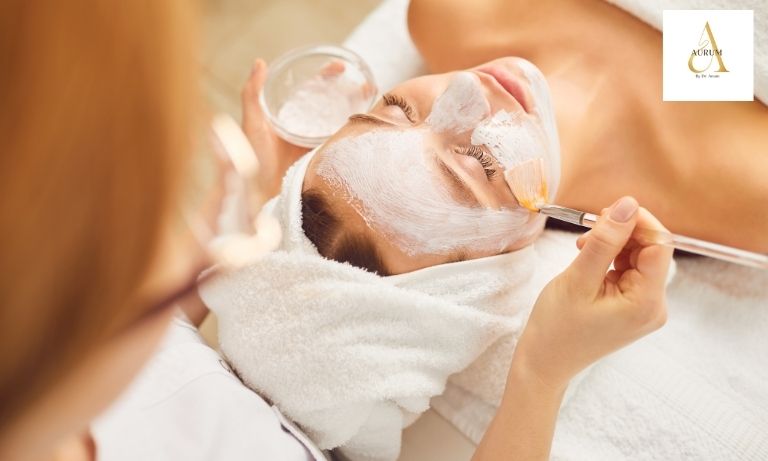
Superficial peels typically produce mild tightness and some flaking over two to three days with no visible downtime. Medium peels produce visible peeling, redness, and sensitivity for five to seven days. In both cases, sun protection immediately afterward is non-negotiable, particularly in Delhi, where UV exposure is significant year-round. Skipping SPF in the days following a peel is the most common reason pigmentation returns faster than expected after treatment. For patients also dealing with choosing the right clinic in Delhi for their peel, that guide covers what to look for in terms of assessment quality and protocol before booking anywhere.
For related reading, see our guide on why pigmentation tends to return after treatment.
Conclusion
Choosing the right approach starts with asking the right questions and understanding what your own skin or concern actually needs, not a generic protocol. The team at Aurum by Dr Anam works with patients through every stage of this decision, from the first consultation to full recovery. Book a Chemical Peel Consultation at Aurum, Punjabi Bagh
Frequently Asked Questions
How many chemical peel sessions are needed in Punjabi Bagh before seeing results?
Most patients see noticeable improvement after three to four superficial peel sessions spaced two to four weeks apart. Medium peels often produce visible change after a single session, with results continuing to improve over six to eight weeks.
Can chemical peels make pigmentation worse on Indian skin?
Yes, if the wrong strength or type is used without a proper pre-treatment protocol. Post-inflammatory hyperpigmentation is a real risk on darker skin tones at medium depth, which is why skin conditioning before the peel and SPF after it are both essential, not optional.
Is there a peel that suits all skin types?
No single peel suits every skin type, which is exactly why a proper consultation matters. Lactic acid peels are generally gentler and better tolerated across more skin types than glycolic acid at equivalent concentrations.
Can I combine a chemical peel with other treatments at Aurum?
Yes. Peels are commonly combined with treatments targeting acne, pigmentation, or skin rejuvenation, depending on what the skin needs. The sequence and timing of combinations are planned during your consultation rather than done on the same day without assessment.